
Allegories of Aletheia
[Miniature]
“Allegories of Aletheia stands at a rare intersection: it honours the discipline of miniature tradition while disclosing political truths through allegory rethought as aletheic event. In Arjuna’s hand, the miniature ceases to be a jewel, symbol, or archive, and becomes an aperture: a clearing where truth, history, and politics converge as unconcealment.

Grab
2013
[Miniature]
Watercolour on Wasli
Allegories of Aletheia
(2013 - 2015)
A Collection of Miniatures in Watercolour on Hand-Made Wasli by Arjuna Gunarathne
A Curated Essay by Sanjay Dalugoda
It is in our Original [animal] Nature to perceive natural simplicities of the lived experience. Children see it best: their honest inquiry cuts through layers of ego-driven intellectual varnish, as their childlike gaze is not coloured by imprints of trauma & grievances, class-consciousness, shadows of guilt and generations of Sedimentated Intentionalities (biases that come down from cultural, societal and generational experiences & emotions and memory imprints) “grown-ups” possess in their supposed maturity. As a result, most strive to elevate the simple into needless labyrinths of concept, mistaking complexity for profundity. Yet the great philosophers, poets, and seers of the past were precisely those who preserved through the child’s faculty of direct encounter with the world. The physicist discerning hidden laws in mundane matter, the sage grasping the infinite through the smallest gesture - both attest to this truth. To find the essence concealed within the profane is the most arduous task, and yet it belongs to those few who can wait in calm sincerity, letting phenomena unfold until the essential discloses itself by surrender to the Sublime.
This disclosure - what Heidegger identifies as Aletheia, the Unconcealment of Being - is the very ground of Arjuna Gunarathne’s collection Allegories of Aletheia (2013–2015). In contrast to the Lahore ateliers of Mughal miniature practice, where the colophon famously proclaimed:
Khaṭṭ bar sutọrm chûn ze āsmān furūgh gīrad
“My script upon the lines takes its radiance from the heavens”
Arjuna departs from the sacred mimicry of Divine order in his art, or rather serves the divine more subtly by reflecting his direct lived experience with sincere simplicity. He takes the laborious stippling tradition, mindful and devotional in its craft, and bends it toward a contemporary register, where the Political and the Ontological are set into play. He is more concerned here with reflecting the socio-political paradigm he finds himself immersed in, rather than celebrating the Transcendental Divine or stippling narratives of the Gods as most traditional Mughal miniatures take their lead from.
His paintings neither lapse into didactic symbol nor dissolve into arbitrary signifier. Instead, they perform what Heidegger insists upon in The Origin of the Work of Art: art is not mere allegory or symbol, but the site where truth sets itself to work.¹ In Arjuna’s work, political events, figures, and contexts do not become illustrations of meaning, nor do they operate as empty codes. They are stripped of direct pictorial narrativity and allowed to stand as presences. They embody, in their distilled clarity, the inner truth of political conditions—truths that can never be hidden, for they belong to the very ontological fabric of the situations from which they emerge.
Here, one must resist reducing these miniatures to allegory in the conventional, pejorative sense. As Craig Owens shows, postmodern allegory re-emerges not as ornament or hermeneutic supplement, but as a structure of appropriation and doubling.² Arjuna works in this register: fragments of history, politics, and memory are simplified, re-cast, and visually re-placed. Yet unlike the allegorist who merely appends meaning, Arjuna’s brush seeks the essential simplicity within complexity. His genius lies in finding that fulcrum point where density yields to lucidity, and where the political is transfigured into an elemental form.
The absence of background in many of his works - those white fields against which his figures are suspended - enacts precisely this gesture of unconcealment. The miniature becomes an aperture, a window into The Real, a clearing (Lichtung) where Being shows itself. Titles serve as supplements, not directives. The image itself resists closure, refusing to be bound by explanatory narration. In this sense, his works are not illustrations but openings of Aletheia, where the political world, in its entanglement of concealment and disclosure, momentarily stands revealed.
Thus, Allegories of Aletheia extends the Mughal miniature tradition by breaking it: it is at once faithful to the discipline of stippling, yet radically modern in intent. It integrates the political while detaching it from reportage, pushing the miniature into the realm where truth, history, and image meet as ontological disclosure. As Heidegger would say: “In the work, the truth of beings has set itself to work.”³
And yet, the richness of this innovation cannot be grasped without situating it within the larger philosophical debates on allegory, myth, and symbol. Walter Benjamin, in The Origin of German Tragic Drama, insists that allegory reveals history not as wholeness but as ruin.⁴ Unlike the Romantic symbol, which fuses essence and appearance, allegory testifies to fracture, to the persistence of decay within the image.⁵ Arjuna’s works bear precisely this allegorical melancholy: the political emerges not as triumphant narrative but as fragmentary truth, a ruin reframed in miniature.
Cassirer, in The Philosophy of Symbolic Forms, would remind us that myth seeks unity, binding image, word, and world into seamless totality.⁶ Ricoeur, in The Symbolism of Evil, complicates this, showing that symbols reach into the depths of human existence otherwise closed.⁷ Between Cassirer’s mythical unity and Ricoeur’s symbolic depth, Benjamin’s fragment disrupts, leaving us with allegory as a broken, discontinuous truth. Arjuna’s works occupy this precise interval: they are not myths, not symbols, but aletheic allegories - sites where fragments disclose political ontology.
The miniature “Zebra Crossing” in particular demonstrates an alethic truth. The inspiration for it came to Arjuna while observing the hordes of Theravada “Sinhala-Buddhist” monks sacrificing their holy saffron robes at the altar of popular politics, in service of the Mahinda Rajapakse government and its longevity. Here, he channels the irony of the monk who is meant to cross the impermanent river of suffering (Dukkha), of Maya (the manifested world), in search of a non-dual cessation of experience - Nirvana - yet instead crosses party-political lines in search of service to a mere mortal, furthering that very suffering.
By encapsulating this realisation in dots of paint, he opens up, allegorically, the black-and-white dichotomy of the zebra crossing, reducing the openness of Shunyata promised in Nirvana to the simple extremity of taking a side. Crossing the road becomes a movement into reductive reality. I believe this depth of inquiry is never possible within the symbolic or semiotic paradigm.
To anchor Arjuna further, we must look to art-historical debates. T.J. Clark demonstrates that nineteenth-century painting often functioned as political allegory, embedding class struggle within visual form.⁸ Similarly, Arjuna renders conflict and authority not as reportage but as distilled allegory, where figures become elemental presences of power and vulnerability. Rosalind Krauss, writing on indexicality, shows how certain works of postmodern art derive force from their status as trace or imprint.⁹ Arjuna’s white grounds and simplified figures work in a similar indexical mode: they are not narratives but traces of history’s truths. And Homi Bhabha’s reflections on hybridity in postcolonial aesthetics remind us that the miniature itself, once an imperial and Mughal medium, becomes in Arjuna’s hands a postcolonial field of resistance: a hybridised practice that reclaims craft for critical thought.¹⁰
“The Righteous Society” is, again, one of these miniatures that radically questions the irony of the refined element collapsing into the hypocritical theatre of the “so-called.” In painting the fallen angel, his miniatures acquire the capacity to interrogate the essential quality of self-titled righteousness - an aura that projects a self-righteous loathing of the imperfect beauty of reality.
This simple allegorical image compels the beholder to draw up the Real from within a mire of self-righteous hogwash. The supposed angel hangs upside down, even as he lectures the masses on refinement. “Direct communication” is never capable of such depth in inquiry.
Thus, Allegories of Aletheia stands at a rare intersection: it honours the discipline of miniature tradition while disclosing political truths through allegory rethought as aletheic event. In Arjuna’s hand, the miniature ceases to be a jewel, symbol, or archive, and becomes an aperture: a clearing where truth, history, and politics converge as unconcealment.
Notes
Martin Heidegger, The Origin of the Work of Art, in Poetry, Language, Thought, trans. Albert Hofstadter (New York: Harper & Row, 1971), 19–20.
Craig Owens, “The Allegorical Impulse: Toward a Theory of Postmodernism,” October 12 (Spring 1980): 68–70.
Heidegger, The Origin of the Work of Art, 23.
Walter Benjamin, The Origin of German Tragic Drama, trans. John Osborne (London: Verso, 1998), 159–76.
Ibid., 183–84.
Ernst Cassirer, The Philosophy of Symbolic Forms, Volume 2: Mythical Thought, trans. Ralph Manheim (New Haven: Yale University Press, 1955), 3–20.
Paul Ricoeur, The Symbolism of Evil, trans. Emerson Buchanan (Boston: Beacon Press, 1967), 12.
T.J. Clark, The Painting of Modern Life: Paris in the Art of Manet and His Followers (Princeton: Princeton University Press, 1984), 11–20.
Rosalind Krauss, “Notes on the Index: Seventies Art in America,” October 3 (Spring 1977): 68–81.
Homi K. Bhabha, The Location of Culture (London: Routledge, 1994), 38–56.
Bibliography
Bhabha, Homi K. The Location of Culture. London: Routledge, 1994.
Benjamin, Walter. The Origin of German Tragic Drama. Translated by John Osborne. London: Verso, 1998.
Cassirer, Ernst. The Philosophy of Symbolic Forms, Volume 2: Mythical Thought. Translated by Ralph Manheim. New Haven: Yale University Press, 1955.
Clark, T.J. The Painting of Modern Life: Paris in the Art of Manet and His Followers. Princeton: Princeton University Press, 1984.
Heidegger, Martin. Poetry, Language, Thought. Translated by Albert Hofstadter. New York: Harper & Row, 1971.
Krauss, Rosalind. “Notes on the Index: Seventies Art in America.” October 3 (Spring 1977): 68–81.
Owens, Craig. “The Allegorical Impulse: Toward a Theory of Postmodernism.” October 12 (Spring 1980): 67–86.
Ricoeur, Paul. The Symbolism of Evil. Translated by Emerson Buchanan. Boston: Beacon Press, 1967.

කාර්මික සේවක Industrial Worker
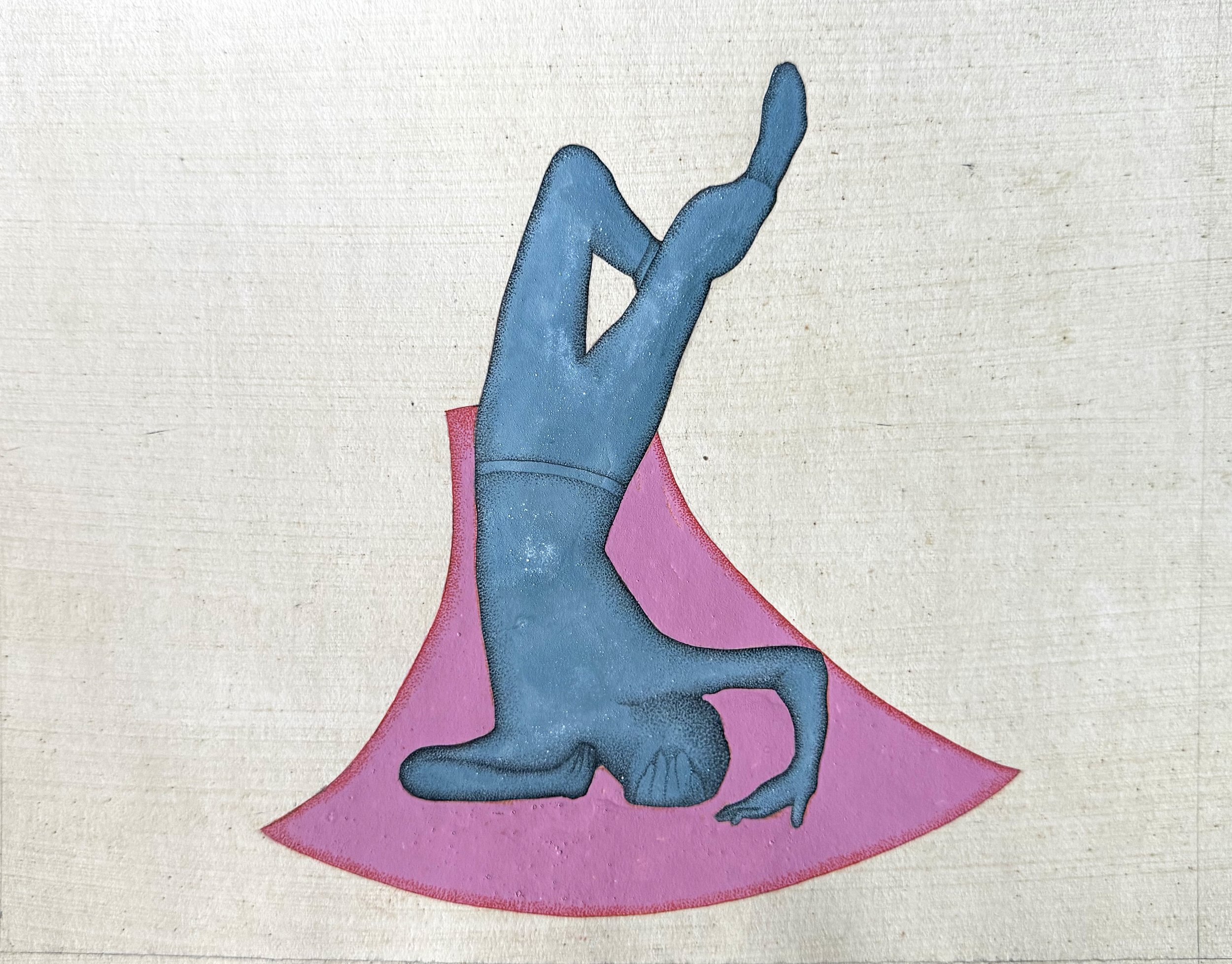
ධර්මිෂ්ඨ සමාජය Righteous society
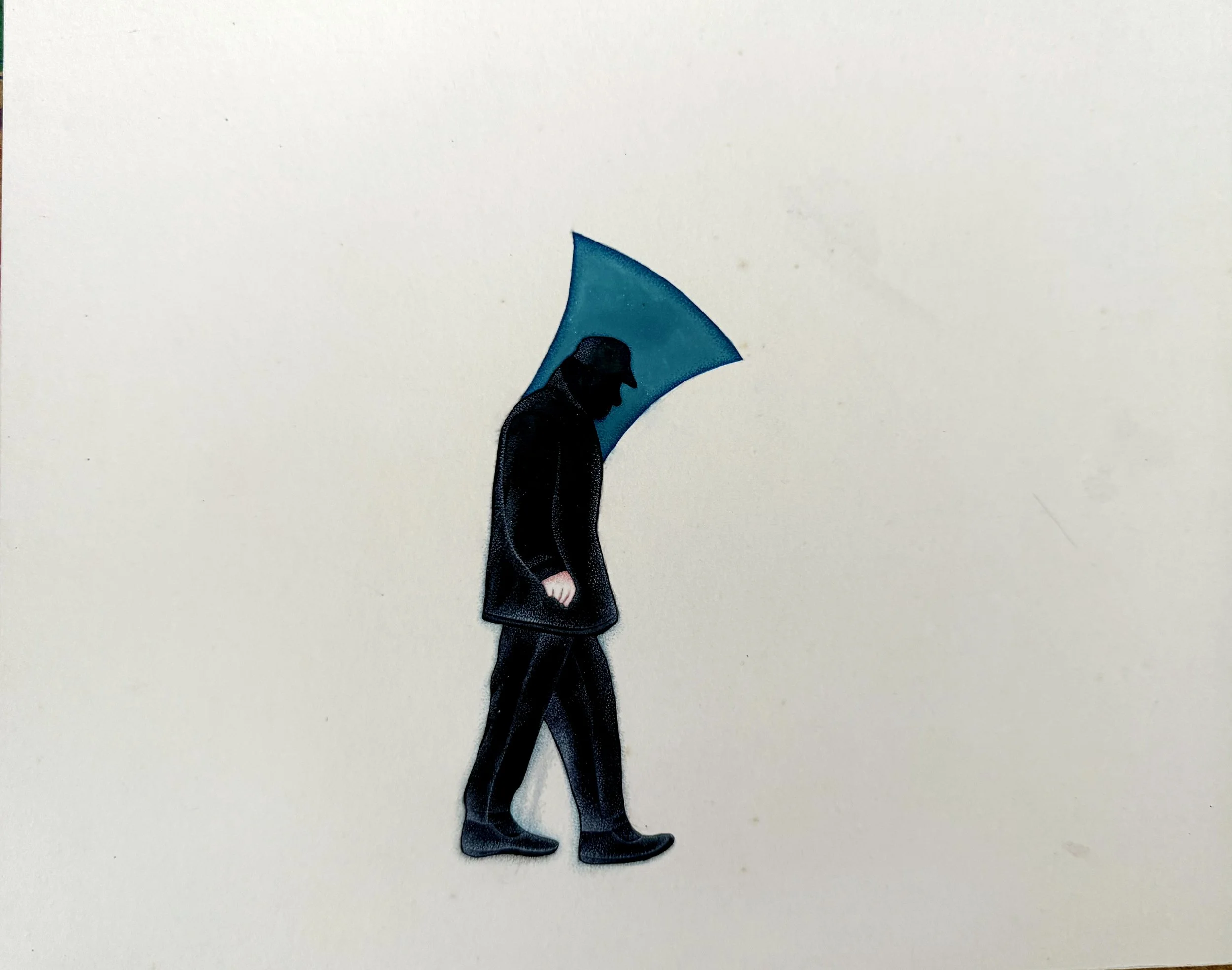
Loneliness
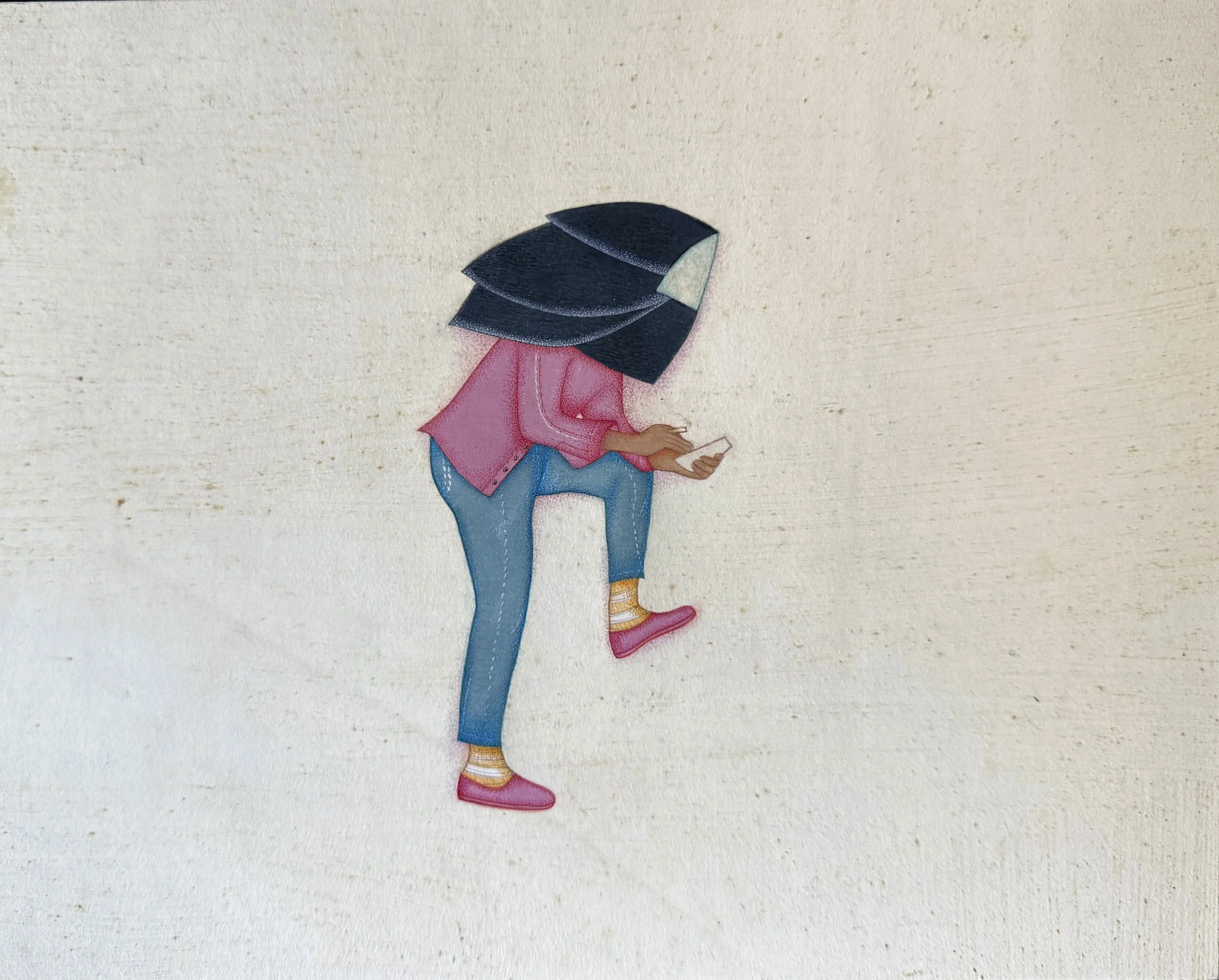
Social Media
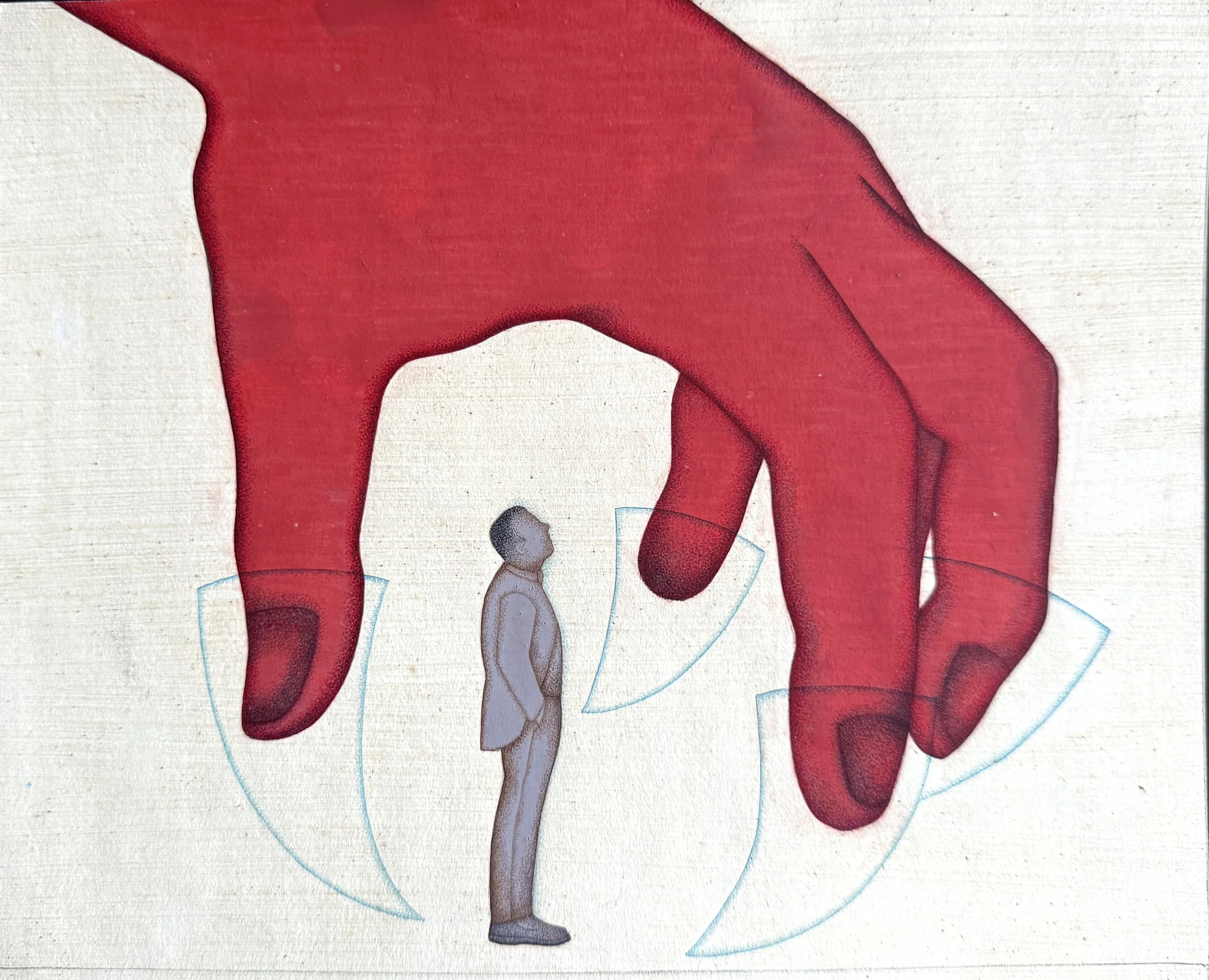
Grab

තෙල බෙදීම Propoganda

Work
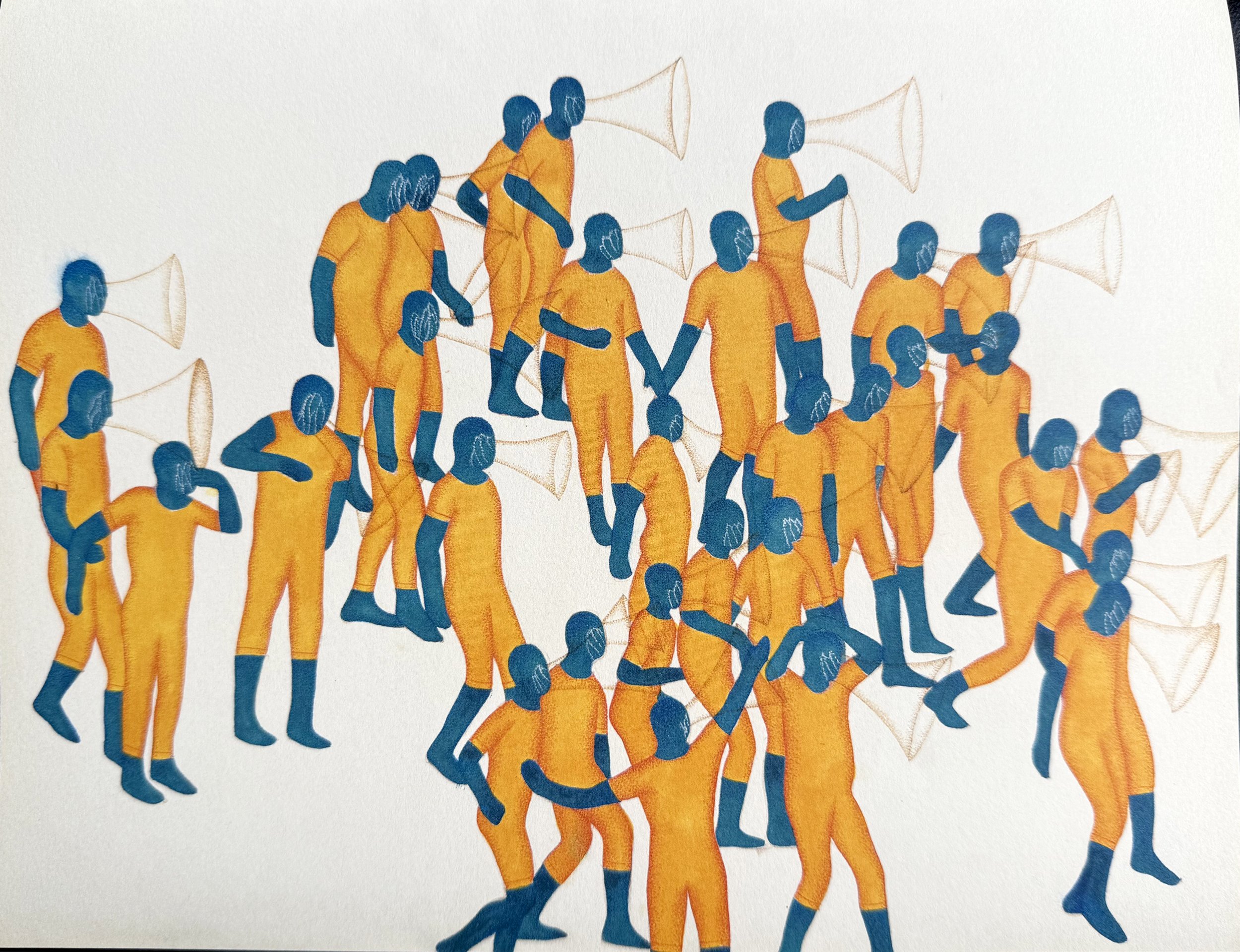
Zebra Crossing
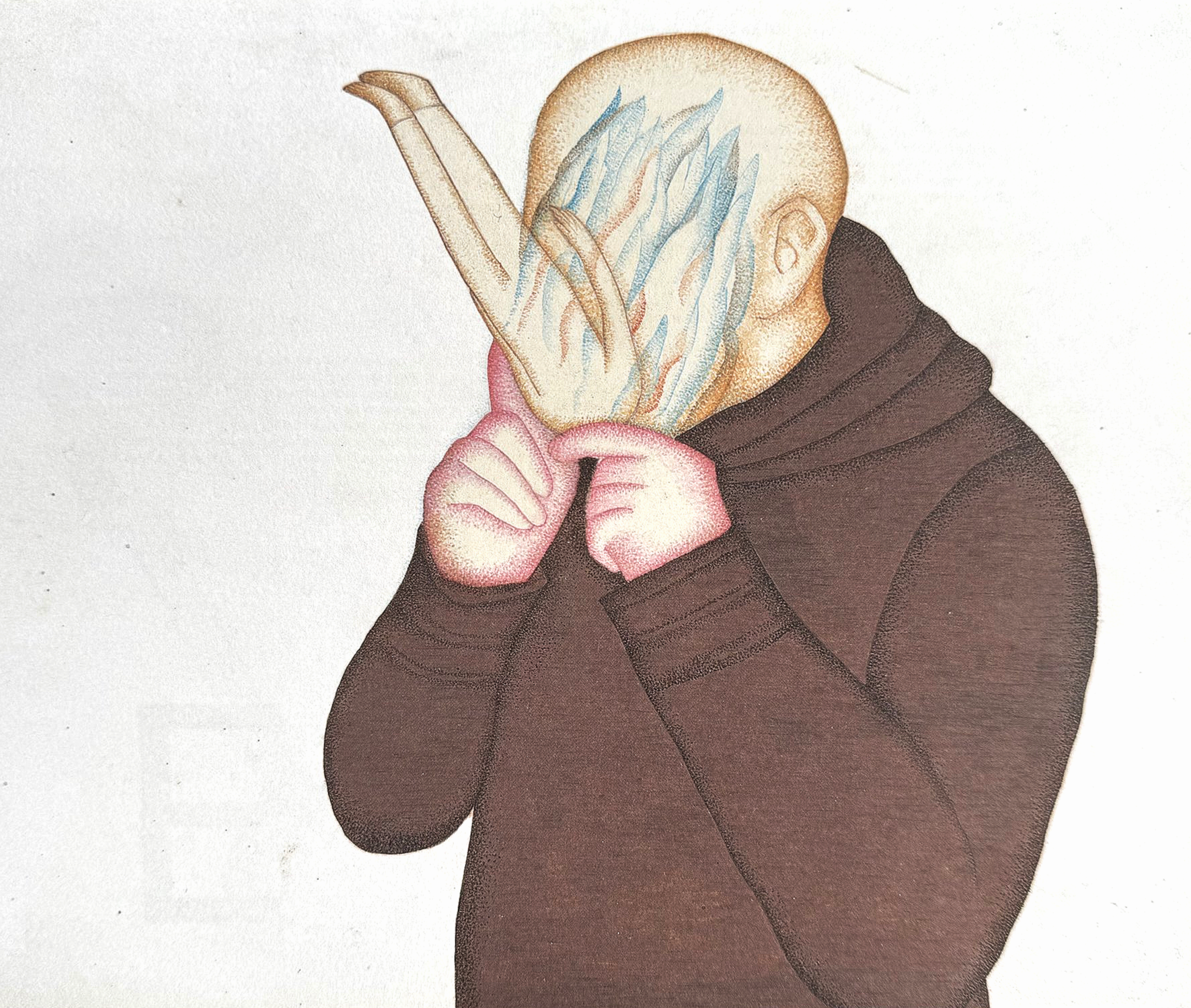
Democracy

Racist

Killer

Yob

Black

Job

Game

Outsider

කෝලාහල Riot

India

හෙට Tomorrow

ද්රෝහියා Traitor

මූලික අයිතිවාසිකම් Fundamental Rights

ත්රිකුණාමලය Trincomalee

ආරක්ෂක කමිටුව Security Committee

ගැරහීම The Insult

මාරයා Death

යෞවන Youth

ඝාතනය Murder

ලෞකික Mundane

මිලේච්ඡයා The Savage

ගෞරවනීය සාමය Honorable Peace

ගෝනිබිල්ලා The Spectre

පරාජිත The Defeated

චොප්ප Smooshed

භීෂණය The Terror

රණ්ඩුව Fight

ටෙක්නිකල් හන්දිය Technical Junction

නැකත Nakshatra

ජාතික ගීය National Anthem

Talk

Empty

ඇඬූ කඳුළින් Weaping

බීරි Deaf
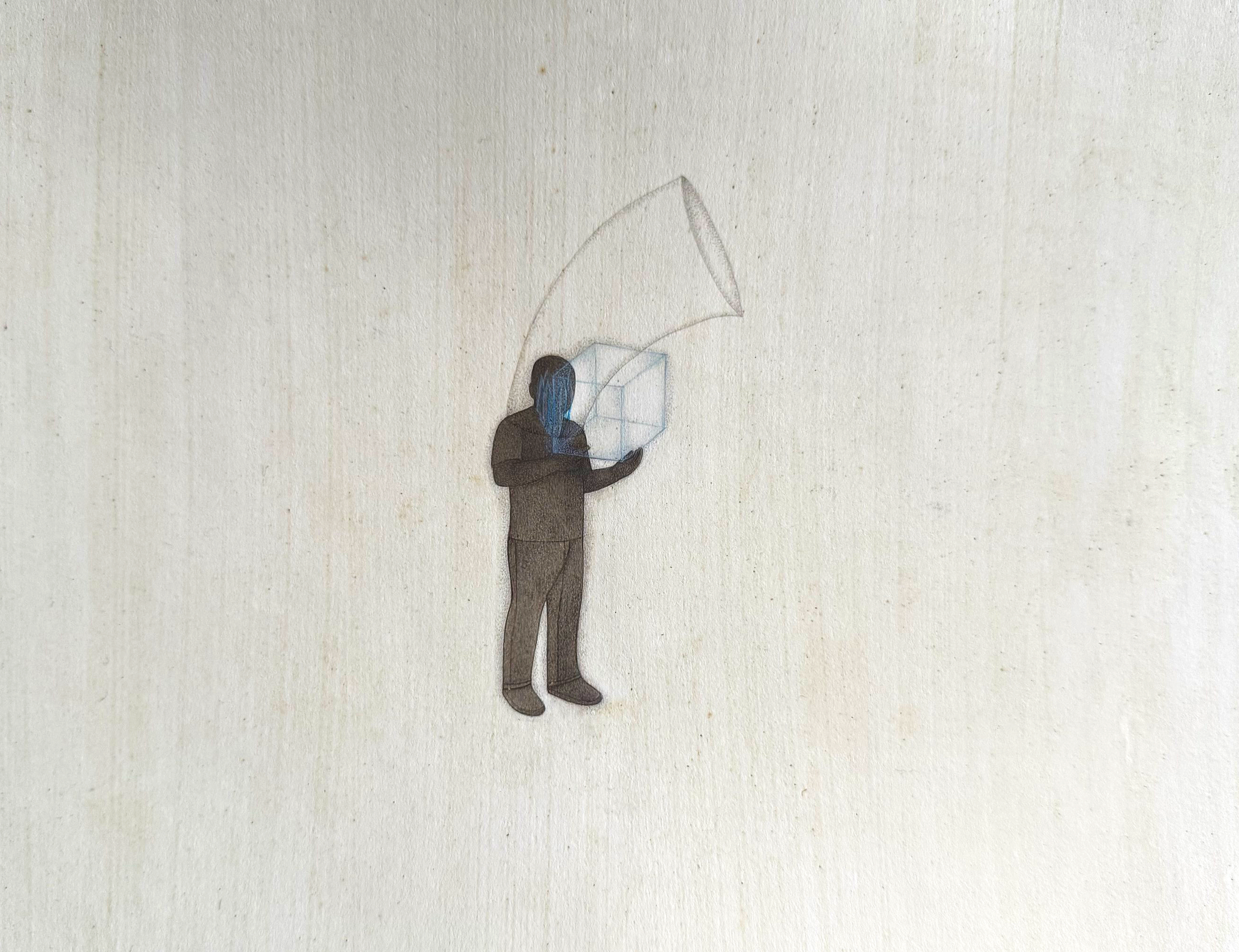
Job Title

හෝදා ගැනීම Washing-up

සන්හිඳියාව

ලජ්ජාව Shame

බැල්ම Gaze

හීනමානය Inferiority Complex

Umpire

චීන China
Explore Arjuna’s World of Miniatures
Delve deeper into the world inspired by Traditional Mughal Miniature Painting, yet
චීන China
තෙල බෙදීම Propoganda
Zebra Crossing
Grab
Social Media
Democracy
Job Title
A to Z of Conflict
These innovative Miniatures were first published in the Artist’s Publication (Book) “A to Z of Conflict” by Raking Leaves in 2018.