
My Observations on Experimentation & Practice.
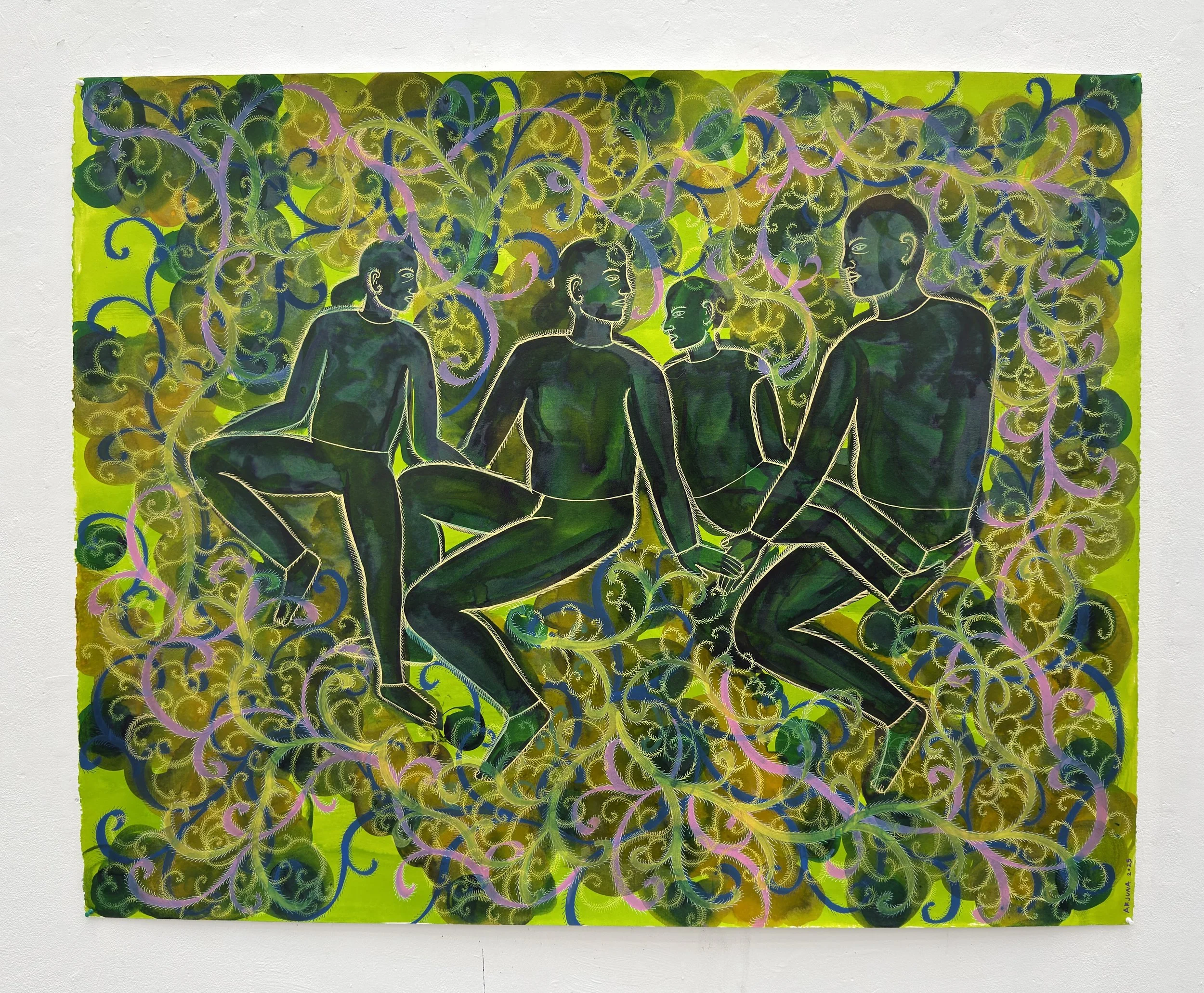
Arjuna Gunarathne | Family 1 | 150 x 120cm | Ink and pigment pen on paper | 2025
Seen comes before words (John Berger, 1977). From an early age, I found myself drawn to the works of Sri Lankan master M Sarlis. Seeing prints of works hung at my childhood home, looking closer, I found his hand disciplined by Western academic figuration yet tempered with a singularly expressive soul. Moreover, turning back to ancient Sri Lankan art, I have always found myself drawn to the temple and cave paintings of the Buddha from the 1st Century BCE, which captivated me with the unmistakable presence of the artist’s hand. The imperfect lines and spontaneous forms of those paintings reveal an inner connection to the subject.
'Culture' is one of the most difficult concepts in the human and social sciences , and there are many different ways of defining it’ (Monica Juneja,2023). The shift in globalisation that took place during the 1980s to early 2000s has highlighted the influences drawn from non–European cultures and practices in Western art history openly. The concept of 'culture' is notably complex and multifaceted, with numerous interpretations and definitions existing across the human and social sciences. This diversity in understanding reflects the intricate nature of culture itself, which encompasses a wide range of beliefs, practices, values, and expressions unique to different societies.
Furthermore, the influence of globalisation brought about a significant transformation in the way culture was perceived and engaged with, particularly within the sphere of Western art history. This era was marked by an increased awareness and acknowledgement of the influences that Western art had absorbed from non-European cultures and practices. The shift prompted art historians and practitioners to reconsider and pinpoint the various elements stolen or inspired from the non-Western traditions, leading to a more nuanced appreciation of global interconnectedness in artistic development.
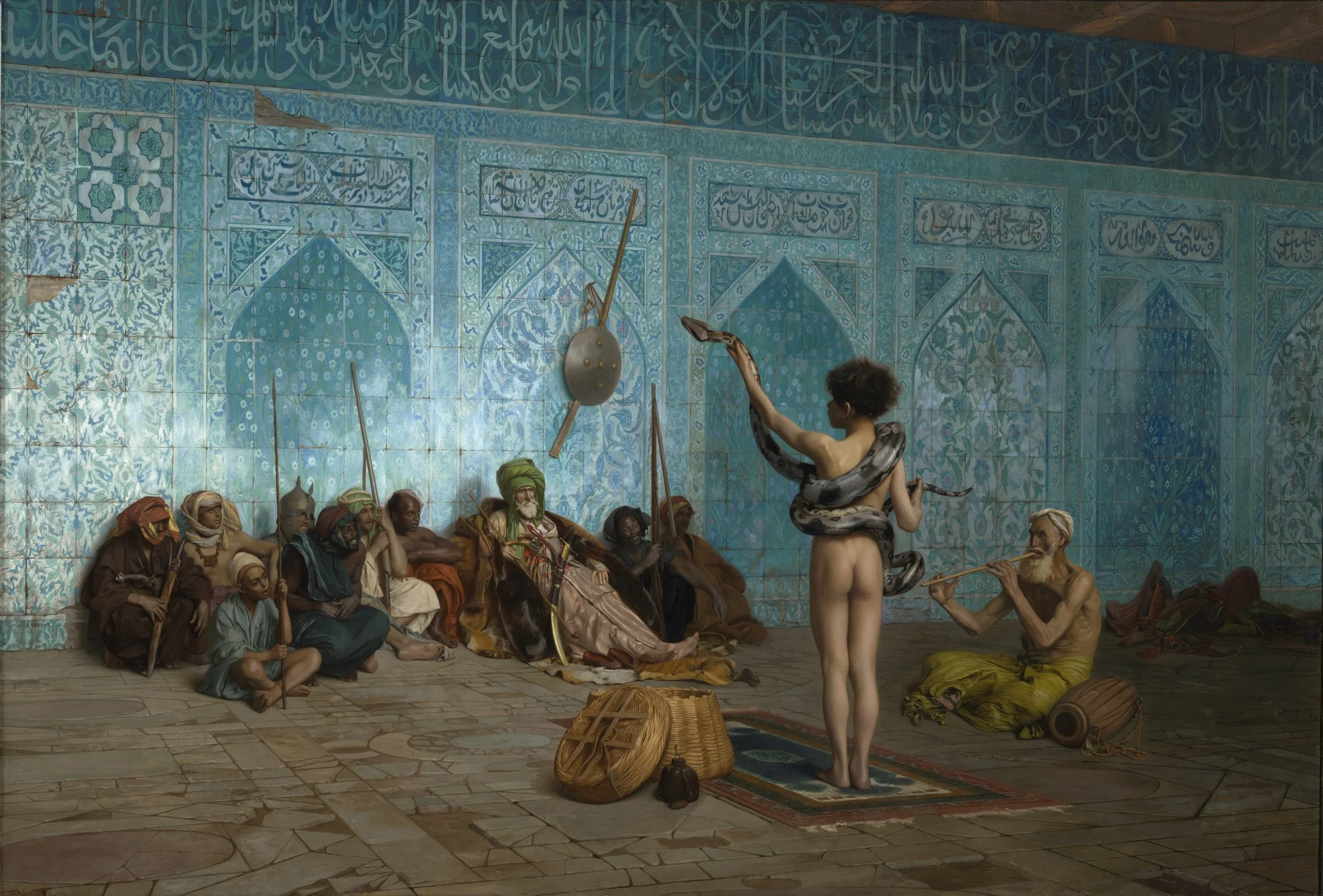
Jean-Léon Gérôme | c. 1879 | Oil on Canvas | 82.2 cm × 121 cm (32.4 in × 48 in)
‘Culture is said to embody the 'best that has been thought and said' in a society’(Monica Juneja 2023). Instead, some of the Western historians and theorists are responsible for creating a distorted image of non-European art in the Western world; Rather than providing an authentic understanding, Western observers have often played a significant role in shaping a distorted perception of non-European art within Western societies which, has led to misconceptions and misrepresentations, where the unique qualities and cultural contexts of non-European artistic traditions are frequently overlooked, misunderstood or undermined. As a result, the appreciation and interpretation of these works have been filtered through a Western-centric lens, which has at times diminished their true essence and significance. For example, the origins of Orientalism and its representation in art.
The French artist Jean-Léon Gérôme depicts a young naked boy holding a serpent as an older man plays the flute—charming both the snake and their audience. Gérôme has constructed a scene out of his imagination, by employing a highly refined and naturalistic style to convey that he himself observed the scene because the ‘ culture depends on its participants interpreting meaningfully what is happening around them, and 'making sense' of the world, in broadly similar ways.’(Stuart Hall (1997) instead, Gerome decided to stage and embellish to appeal to the Western imagination. ‘The idea of European identity as a superior one in comparison with all the non-European peoples and cultures’ (Said, E. 1978) ‘Gerome travelled to Egypt seven times between 1857 and 1880’ (Mackenzie 1995, p. 54, Isra Ali 2015). They took photographs so that he could reliably recreate architectural details when he painted his Orientalist scenes back in his European studio, true to his style of realism. This is one of the examples in European art history where artists have tried to emphasise to plant negative influence of the East (‘Orient) in the Western world for their own advantage, following the Euro-American propaganda. ‘The critical gaze has been directed to selection processes and the values which underpin them and work as a filter for works that come from the non-European world.’(Monica Juneja 2023) And the artists who painted the landscapes in Orient found it hard to be successful, as did those artists who painted the more imaginative scenes of violence and sexuality. Because the ‘painters who did not cater to that daydream, and whose aim was a more faithful depiction of what they saw had difficulty finding an audience’. (Isra Ali 2015)
It is also important to consider the creation of an “Orient” because of imperialism, industrial capitalism, mass consumption, tourism, and settler colonialism in the nineteenth century.
‘How the colonial project itself ‘facilitated the presence of these painters in these places, engender the rise of this particular genre in fine art, and created a market for these works’(Isra Ali 2015); and the Europeans’ increased consumerist trends of cultural materials and objects, like porcelain, textiles, fashion, and carpets, from the Middle East and Asia. This provoked most artists to collect or see exhibitions of foreign artefacts, leading to an influence in their work. Like culture, art is also about feelings, attachments and emotions as well as concepts and ideas.
Vincent Van Gogh and Hiroshige are two of the many artists by whom I was inspired. Initially, I saw Van Gogh’s works in printed books when I was in the art school in Colombo, Sri Lanka, in the 1990s. ‘We only see what we look at’ (John Berger, 1977). Once I migrated to the UK in 2005, I was acquainted with Van Gogh’s original paintings face to face for the first time in the National Gallery in London and the Windsor Castle Collection. There was a deep emotional connection with the works, especially with the landscapes.
‘The way we see things is affected by what we know or what we believe’1.The movement of the bold, deep brush strokes, swirling an‘The way we see things is affected by what we know or what we believe’ (John Berger, 1977). The movement of the bold, deep brush strokes, swirling and flaming the canvases with intense use of strong colour as if it is swaying to music. The mood and the energy running down the spine completely took a turn from the way I used to see his work. ‘Van Gogh actually drew with his paint, making each stabbing brush stroke a testament to his magnificent draughtsmanship and to his tumultuous emotions.’(Katharine Kuh (1963) I started thinking about how Van Gogh became Van Gogh himself. ‘The Painter’s ways of seeing is reconstituted by the marks he makes on the canvas or paper’(John Berger, 1977) I made drawings and paintings, experimenting with different materials almost every day, documenting every possible movement of objects, my family and their surroundings; also, as a migrant artist, social and political issues that I face, experience, day-to-day.
The emotional confidence I developed through drawing with ink and employing direct, spontaneous one-line techniques evolved gradually. But as the lines became more abstract, I discovered a deeper, more cathartic process. ‘Our vision is continually active, continually moving, continually holding things in a circle around itself, constituting what is present to us as we are.’(John Berger, 1977)
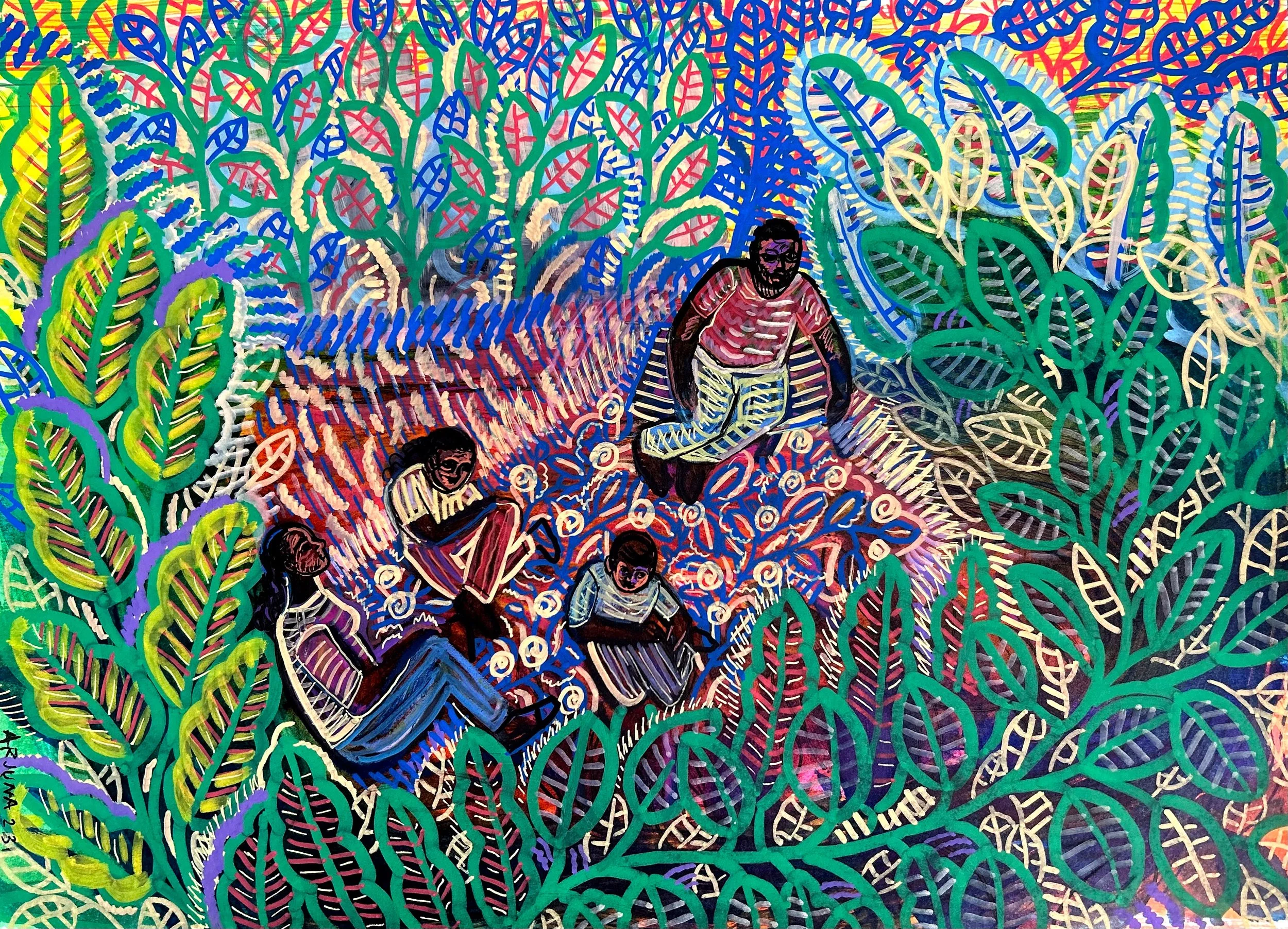
Arjuna Gunarathne | Family II | 2023 | 50.8 × 60.96 cm (20” x 24”) | Ink & Acrylic Pigment Pen on Paper
My continued practice made me realise my own purpose, immersing myself in the simpler form while applying the disciplined techniques of miniature painting to the ink medium opened a more meditative pathway to my interiority. It allowed me to access visions, memories, and emotions not as symbolic representations but as pure, subjective experiences. ‘The more imaginative the work, the more profoundly it allows us to share the artist’s experience of the visible.’(John Berger, 1977) ‘This experience of resistance and change is one of the things that tells me there is an inside to me a mind.’ (Julian Bell (2017 and 2024) ‘Soon after we can see, we are aware that we can also be seen’(John Berger, 1977). The painting reveals the painter’s intentions no less than the painter’s intentions illuminate the painting (Michael W. Cothren, Anne D’Alleva, Methods & Theories of Art History,2005, 2012, 2021). Van Gogh himself had opened himself to study, experiment and was influenced by many artists before and during his time. Dutch Masters Rembrandt, Huls, and English artist John Constable, in Paris- Kamil Koro, Francois Miller, Flemish master Peter Paul Ruban, worked beside Anton Morve, a landscape artist, and a colour theorist, Eugene Delacroix. Moreover, from Gauguin, Vincent learned to use the flat use of solid colour, which is visible on his copies of Japanese woodblock prints. He visited impressionists’ exhibitions and copied the works of Mia, studied the human anatomy and perspective from books, evidencing how artists develop their practice through various studies.
Last summer, I was fortunate to witness the great Japanese printmaker Utagawa Hiroshige, artist of the open road, woodblock prints exhibition at the British Museum. His absorption of the western perspectival structure into his native flatness not as mimicry, but as poetic synthesis. Hiroshige writes
‘I entrust my brush
to that highway heading east
and seek journey's end, in the celebrated sights
of a pure land in the west’
(The Introduction to Hiroshige: An Artist on the Open Road.” The British Museum (blog)
The influence of Hiroshige's woodblock prints is visible in Van Gogh's paintings. With the discovery of Hiroshige's woodcut prints in the winter of 1888, his work underwent a fresh evolution’ (Paul Colin, 1926). His reaction was remarkable, and Van Gogh him- self writes to his brother Theo…
‘Come now, isn’t it almost a true religion which these simple Japanese teach us, who live in nature as though they themselves were flowers?
‘And you cannot study Japanese art, it seems to me, without becoming much gayer and happier, and we must return to nature in spite of our education and our work in a world of convention….
‘I envy the Japanese the extreme clearness that everything has in their work. It is never tedious and never seems to be done too hurriedly. Their work is as simple as breathing, and they do a figure in a few sure strokes with the same ease as if it were as simple as buttoning your coat.
‘Oh! Someday I must manage to do a figure in a few strokes. That will keep me busy all winter. Once I can do that, I shall be able to do people strolling on the boulevards, in the street, and heaps of new subjects. While I have been writing this letter I have drawn about a dozen. I am on the track of it, but it is very complicated because what I am after is that in a few strokes the figure of a man, a woman, a child, a horse, a dog, shall have a head, a body, legs, all in the right proportions.’(Lara Vinca Masini (1980)
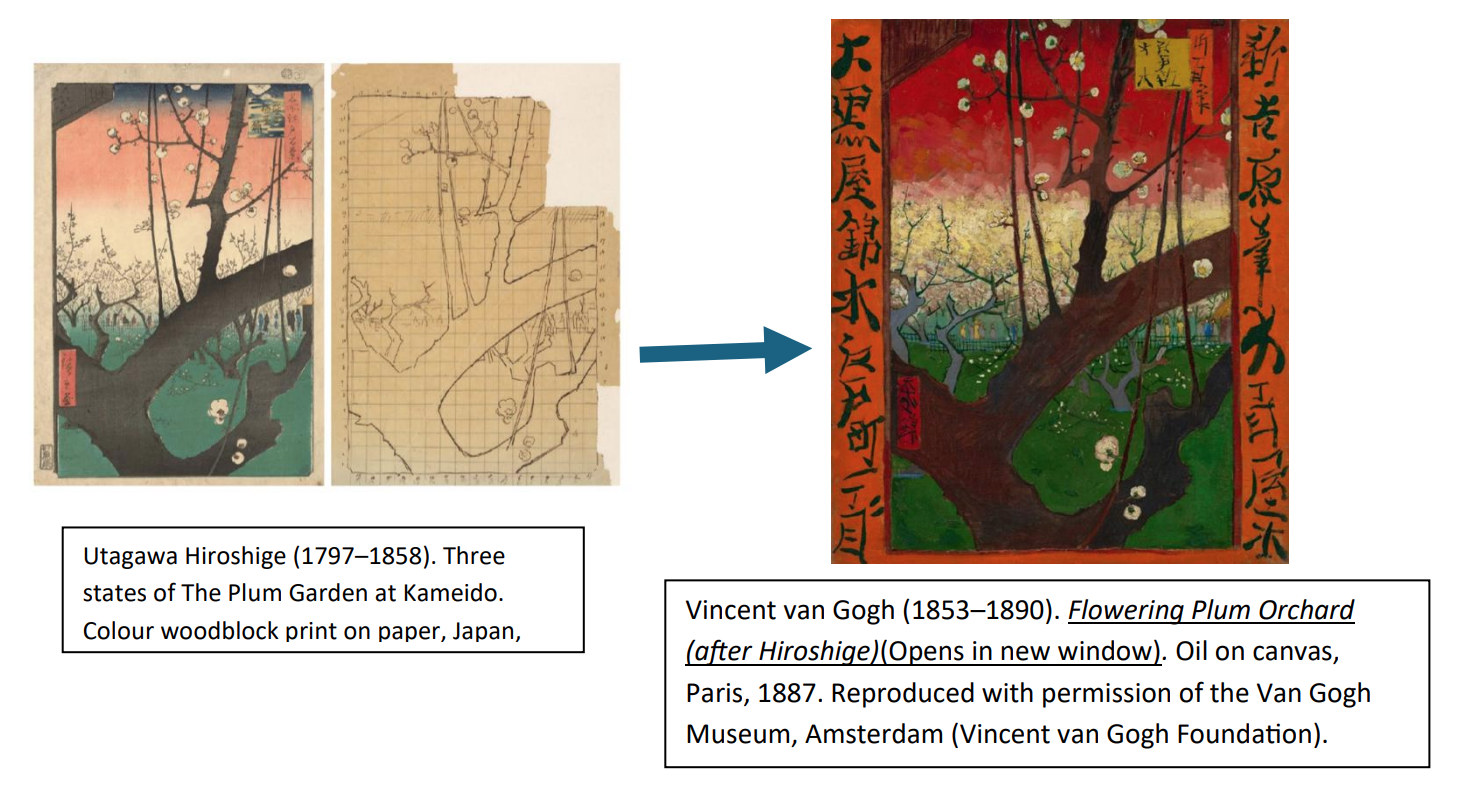
Van Gogh's works showed a combination of Impressionism and Eastern art. He liked the practice of Impressionists’ quick, open-air paintings. Furthermore, his pure colour militated against the clear, intellectual line - quality of the Japanese(Lara Vinca Masini (1980).
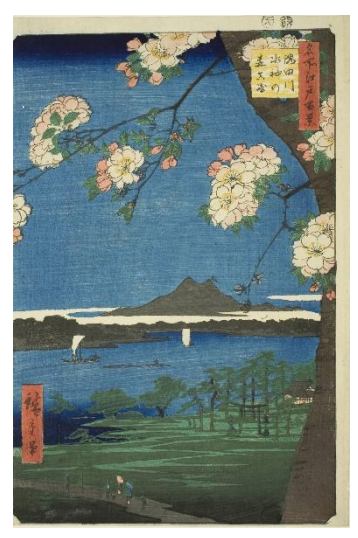
Sumida River (Sumidagawa Suijin no mori Massaki), from the series "One Hundred Famous Views of Edo | 1856 | Color woodblock print; Oban (image 2)
It was this bridge between East and West, technique and institution, structure and Sentiment, that taught me how to reconcile inherited traditions with present, mindful feeling. Hiroshige introduced perspective not as architecture, but as atmosphere. He infused the flat-depth pictorial plane with calm and poetic Zen resonance. As for Van Gogh, his painting becomes clearer, pleasantly lighter and happier. In his painting ‘Pear-tree in Blossom, 1888. ‘The little pear tree has a violet trunk and white flowers, with a big yellow butterfly on one of the clusters. To the left in the corner, a little garden with a fence of yellow reeds, and green bushes, and a flower bed. A little pink house.’(Lara Vinca Masini (1980) As his poetic letters emphasise the dream-like spring evoking his idealised Japanese landscape, the picture is drawn as a thoughtful trail of a completely re-invented space, where the Japanese stair perspective influences of lifted background and the expanded foreground created a space that has reached a level at a glance.
My mediums vary depending on what I engage with and respond to on the day. Be it oil, watercolour, ink, pastel, etching, each medium is a different method to encapsulate and express the same perspective in different rhythms (image 3). I chose based on what the work demands, not what tradition dictates.
In conventional art schools, learning how to hold or handle a brush is one of the important practices for artists, as it affects their methods of making or creating art. For example, calligraphy in Islamic art, Mughal miniature painting, temple paintings of India and Sri Lanka. Moreover, gathering resources was accomplished by various craftsmen, known as guilds. Such as paper makers, brush makers and pigment suppliers, making the artists the consumers. Therefore, in traditional practices, the materials had their own stories before they became part of the artist's goods.
In the early seventeenth century, the traditional Japanese Edo printmaking, ‘A woodblock print image is first designed by the artist on paper and then transferred to a thin, partly transparent paper. Following the lines on the paper, now pasted to a wooden block usually of cherry wood, the carver chisels and cuts to create the original in negative, with the lines and areas to be coloured raised in relief. Ink is applied to the surface of the woodblock. Rubbing a round pad over the back of a piece of paper laid over the top of the inked board makes a print.’ (Woodblock Prints in the Ukiyo-e Style -essays, October 2003:The Metropolitan Museum of Art -Department of Asian Art )
In the process of traditional art making, artists get limited opportunities to incorporate their personal ideas into their artwork. That could be a case of the artist being bound by certain rules, such as religious restrictions, patron influence, market value, and artist recognition; therefore, limiting his personal influence on the artwork.
Moreover, traditional art is recognised through its line quality and the fineness of the image. However, the deep attention identifies various approaches to painting within the same art form, such as in Miniature painting involves Persian art, Mughal art and Pahari art and temple paintings in India and Sri Lanka. With the discovery of new materials, the traditional arts have evolved through the centuries.
There is a history of traditional art in other parts of the world. In art history, there are traditional institutions developing their practices for many centuries; their aesthetics were different to Western art.
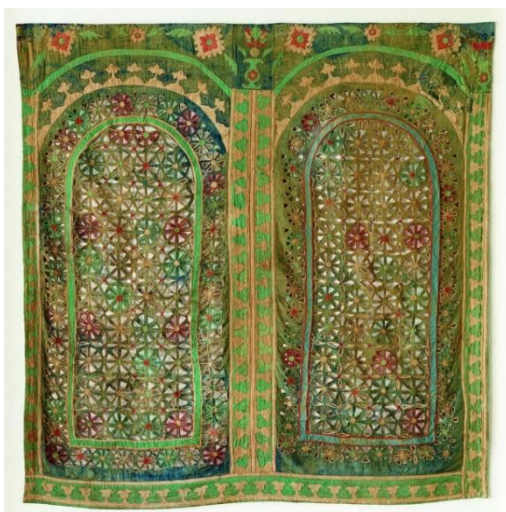
Haiti by artist unknown (Morocco; late 19th–20th century; cotton plain weave cut and appliquéd to bast fiber cloth; Former collection of Henri Matisse (image 4)
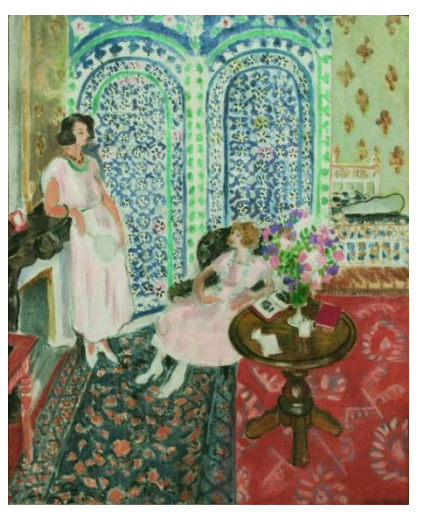
The Moorish Screen by Henri Matisse (1921; oil on canvas; Philadelphia Museum of Art, bequest of Lisa Norris Elkins, 1950; courtesy the Philadelphia Museum of Art; © 2017 succession (Museum of Fine Arts)
Very few people could see and experience the real tradition, because of the blanket view on cultural arts aspects, such as miniature painting, woodblock printing. Similarly, to Van Gogh, most Western artists steal inspiration from the traditional arts of other cultures as foreigners. For example, Henri Mattise’s influence from Moroccan art.
Matisse immersed himself in Islamic culture after visiting Morocco in 1912 and 1913. There, he hired models and collected Moroccan textiles. He incorporated the flattened space of Islamic art with its delight in pattern and its rich colour. This was rapidly scattered with the artist’s desire to move away from Western European arts focus on fully rendered form and perspectival space. In addition to its formal visual language (line, colour, shape, form, texture, space, tone, and composition), the artist also drew inspiration from the Islamic world, embracing a fantasy of sensual life. Matisse brought home from Granada, a postcard showcasing the Hall of the Beds, with exquisitely decorated changing room of the Alhambra bath house, where the king’s wives disrobed before bathing. Furthermore, Michael Woodson writes in his Artists Network (blog), ‘Matisse owned a large Chinese relief panel of four characters executed in a bold, energetic style’, often quoting an old Chinese proverb: “When you draw a tree, you must feel yourself gradually growing with it.” (Michael Woodson, Artists Network (blog) Most artists wrap the other cultural artist influences tied to themselves with affection.
‘For Matisse, drawing an object wasn’t a process of imitating its surface appearance but an act of supreme empathy.’ (Michael Woodson, Artists Network (blog) In his brush drawing, Acrobat, of 1952, which shows the extreme simplification that he achieved in reducing objects to the status of a sign, evidencing how modern and contemporary artists have viewed and are viewing other cultural conventional practices like foreigners, taking influence on their works.
Therefore, is there such a thing as ‘original’ in Euromerican art, as there is an abundance of stolen art forms? For example, Picasso stole the visual elements of African masks, Matisse copied from Islamic art, and Warhol’s pop art repetition was another stolen idea from Yayoi Kusama. Taking these into account, without Asian art, Islamic art and African art, Euromerican art could not exist. This is because Western art heavily depended on other cultural art forms; therefore, the West itself cannot be singled out as Western or European art. Instead, they should study, respect and avoid undermining other cultural art forms around the world before they judge and determine their own to be the best.
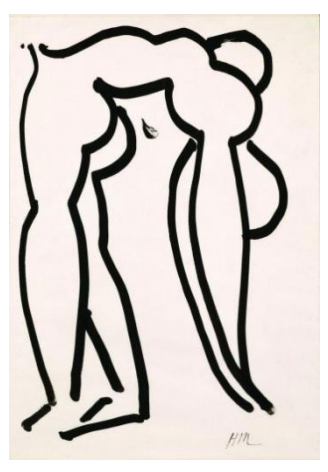
Acrobat by Henri Matisse (1952; ink on paper; Musée National d’Art Moderne, Centre George Pompidou, Paris)
Euro-American historians whitewash the significance of other cultural art forms, spreading Eurocentric stories about white dominance. Harari (2011) reinforces the non-existent idea of immigration, implying that, ‘ Humans first evolved in East Africa…some of these archaic men and women left their homeland to journey through and settle vast areas of North Africa, Europe and Asia.’ Hence, human nature is to immigrate from one place to another. As an immigrant artist, I faced unexpected difficulties of living outside my home country, and that is exactly what I have recorded in my artwork.
Just like lines and compositions, colour also plays a significant part in conventional and contemporary European and non-European art, as it can signify cultural identities, symbolise the rank, gender and beliefs. For example, the colour black; ‘Odilon Redon thought it ‘the most essential colour’, Picasso said it was the only real colour’, and for Matisse it was not simply a pigment but a force’. (James Fox, 2021)
Colour is central to how I express myself and engage with my materials. Over time, I’ve learned not to be frugal with pigment or supplies. Each material must serve the emotion I wish to convey. As my practice deepened, I came to understand the particular qualities of each brand of pencil, pen, pastel, watercolour, and paper I used, their chromatic range, how they held to the surface, how they bound and responded to touch.
Migration to England brought with it unexpected hardship and an urgent need to adapt and integrate. With limited means, my practice turned inward. My sketchbook became my confidant. My daily life study became my meditation. The gestural spontaneity of line, once meticulously trained in miniature discipline with the childhood memories of home temple paintings, now carried the emotional weight of social dissonance. These daily pen and ink drawings bare, unadorned, were honest expressions of the everyday: fatherhood, survival and longing.
The emotional confidence I developed through drawing with pen and ink, employing direct, spontaneous oneline techniques, evolved gradually. In the earlier works of this style, I sought to respond to express raw emotions of exhausted, battered, mental and physical condition directly as an artist in political context. My black lines became more abstract, unravelling a deeper, more therapeutic process. Immersing myself in this simpler form while applying the disciplined techniques of miniature painting to the ink medium opened a more meditative pathway to my interiority. It allowed me to access visions, memories, and emotions not as symbolic representations but as pure, subjective experiences.
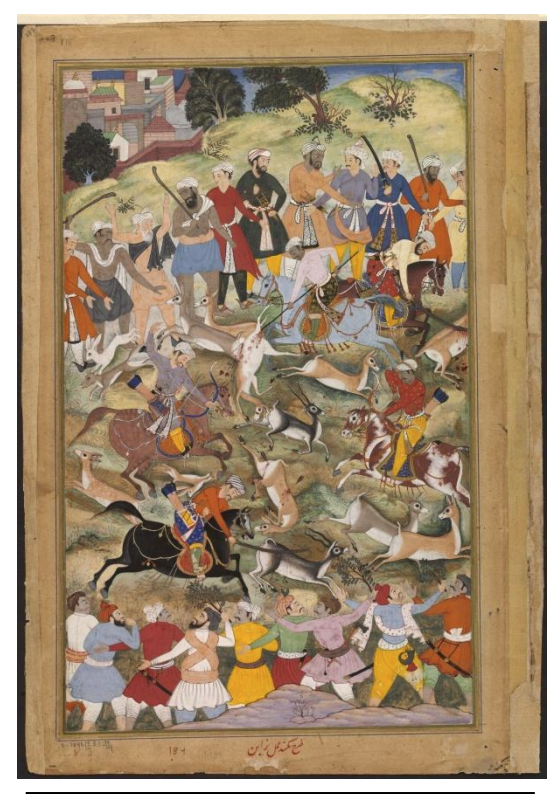
Painting, Akbarnama, Akbar hunting at Palam, outline by Mukund, painting by Narain, opaque watercolour and gold on paper, Mughal, ca. 1590-95
In summary, many artists embark on unique journeys, deeply shaped by their engagement with the political and social environments in which they create. Each artist adapts and experiments with various artistic techniques, striving to communicate their emotions and ideas through their own lens. Throughout my career, I have studied, drawing inspiration from a diverse range of artistic traditions and schools. These experiences have informed my practice, allowing me to construct statements within my work that respond directly to the political and social contexts around me. In my creative process, I aim to reflect and address the realities of contemporary society—responding to the situations we observe and experience. I believe it is essential for artists to continue this tradition: to use their work as a means of commentary and engagement with the world.
Bibliography
John Berger(1977), Ways of Seeing, -Chapter 1
Stuart Hall (1997) Representation: Cultural Representations And Signifying Practices By ( Page 3)
Monica Juneja (2023) Global Art History and the” Burden of Representation” (pages 274 to 293)
Katharine Kuh (1963) Modern Art Explained- Chapter 3: Break-up of Pigments (page 24)
Julian Bell (2017 and 2024) On Painting, Expression- page 29
Michael W. Cothren, Anne D’Alleva, Methods & Theories of Art History (2005,2012,2021) Richard Wollheim: lecture series 1984, Psychoanalysis and contemporary art history, chapter 6, page 136
The Introduction to Hiroshige: An Artist on the Open Road.” The British Museum (blog) accessed November 08, 2025, https://www.britishmuseum.org/blog/introduction-hiroshige-artist-open-road
Paul Colin (1926), translated by Beatrice Moggridge: VAN GOGH- Master of Modern Art 1926, page 43
Lara Vinca Masini (1980), VAN GOGH: The life and work of the artist illustrated with 80 colour plates: Letter to Theo; page 22-23
Woodblock Prints in the Ukiyo-e Style -essays, October 2003: The Metropolitan Museum of Art -Department of Asian Art (https://www.metmuseum.org/essays/woodblock-prints-in-the-ukiyo-e-style)
Michael Woodson Artists Network (blog) accessed 22nd November 2025
Michael Woodson Artists Network (blog) accessed 22nd November 2025 (images 4, 5 & 6)(https://www.artistsnetwork.com/magazine/objects-inspire-henri-matisse-art/#:~:text=Matisse%20went%20on%20to%20immerse,to%20hang%20more%20formal%20adventures.)
James Fox (2021), The World According to Colour. A Cultural History by James Fox (Page 42)
Isra Ali (2015) The harem fantasy in nineteenth-century Orientalist paintings Isra Ali
Said, E. 1978. Orientalism. New York
Yuval Noah Harari (2011) Sapiens: A Brief History of Humankind
Some of my works:
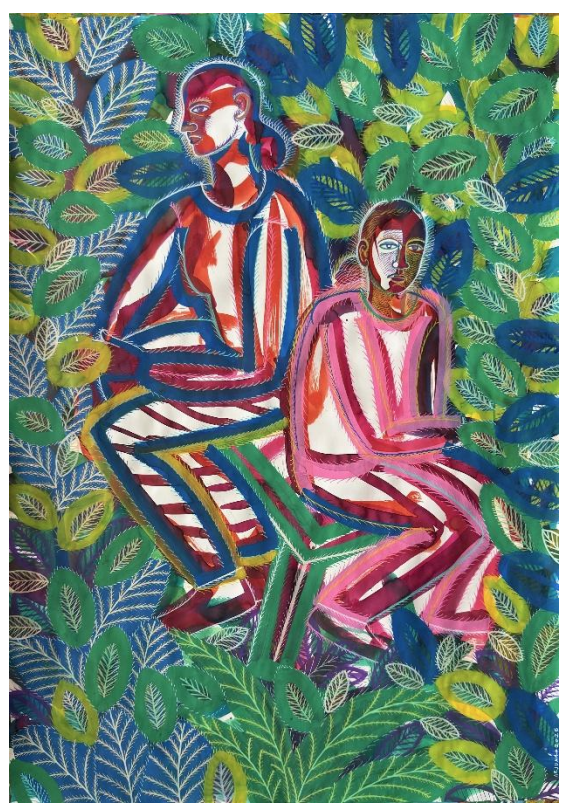
Mother and Daughter, 84 x 59cm Ink and pigment pen on paper, 2025
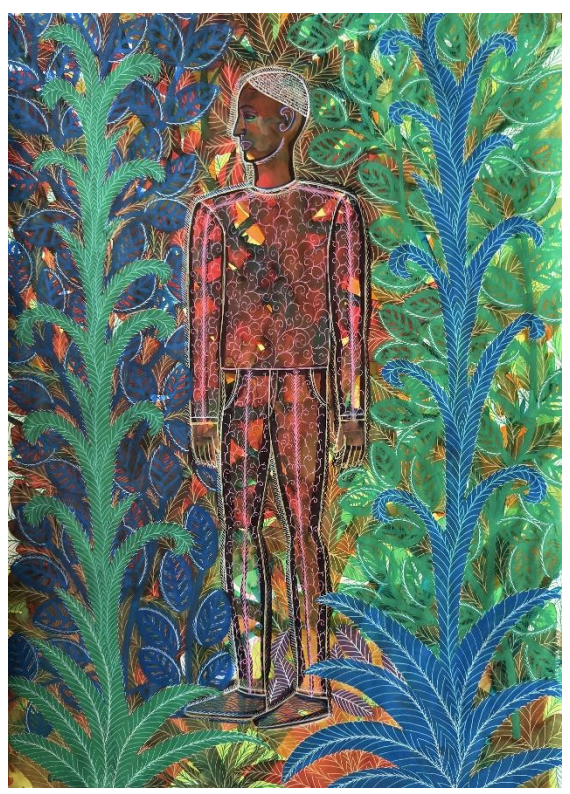
Friday, 84 x 59cm Ink and pigment pen on paper, 2025
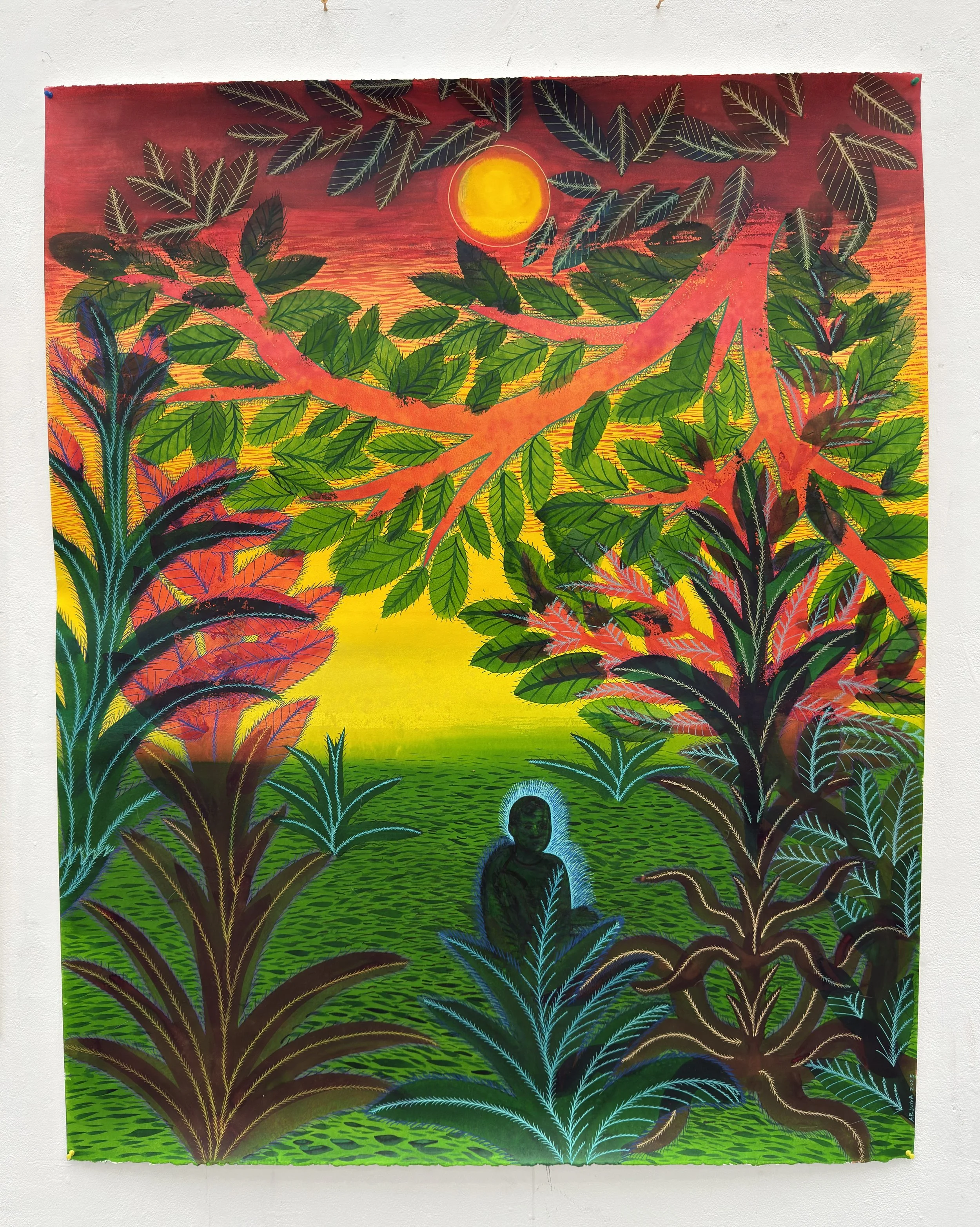
Self-portrait 1, 150 x 120cm Ink and pigment pen on paper, 2025
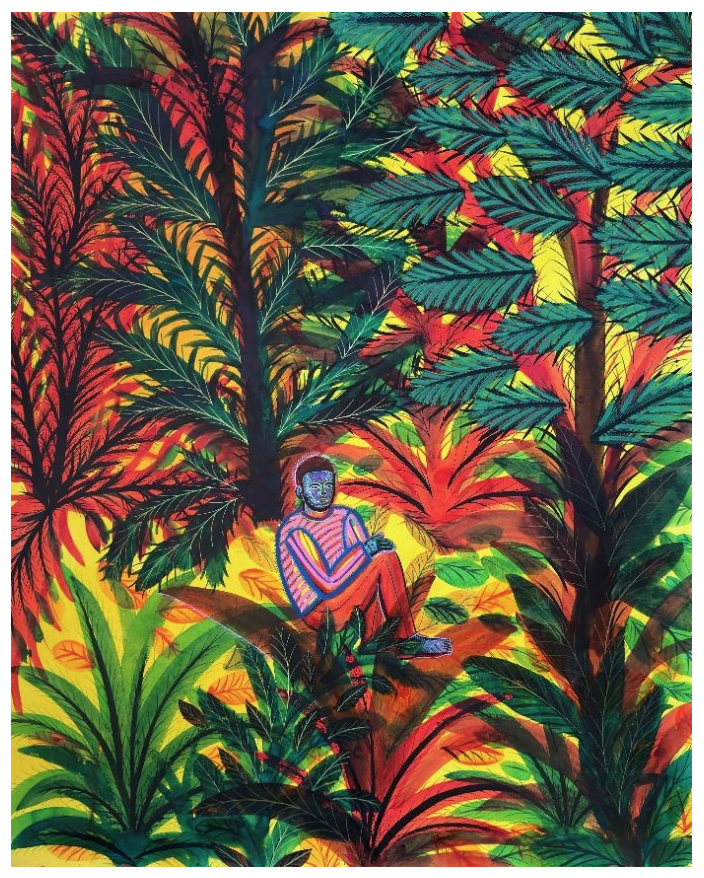
Self-portrait 2,150 x 120cm Ink and pigment pen on paper, 2025
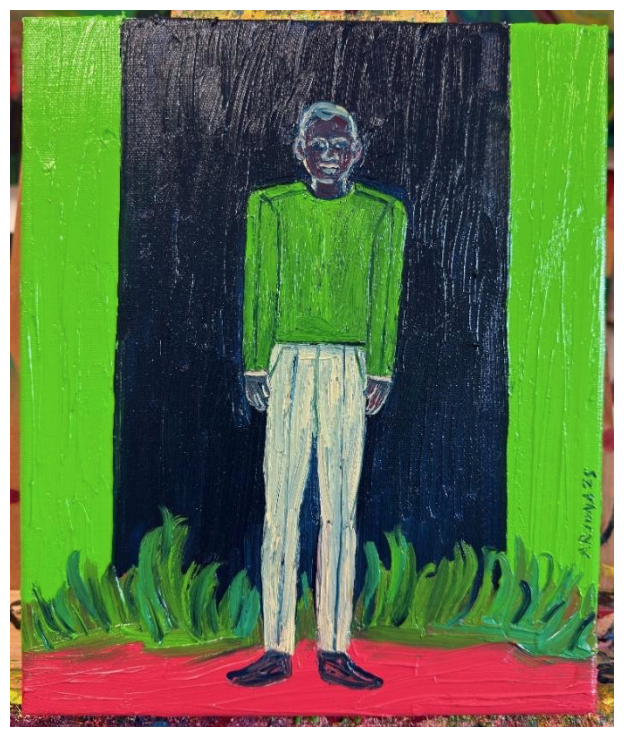
Displaced Person 1, 38 x 28 cm Oil on canvas, 2025
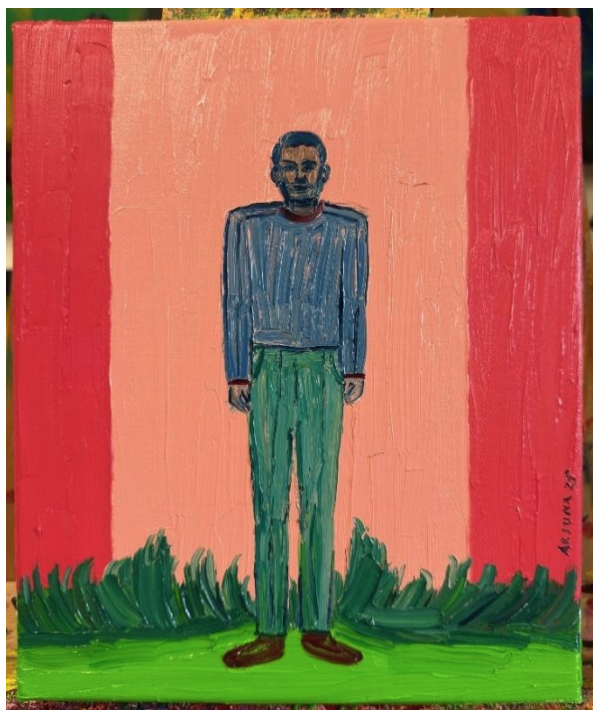
Displaced Person 1, 38 x 28 cm Oil on canvas, 2025
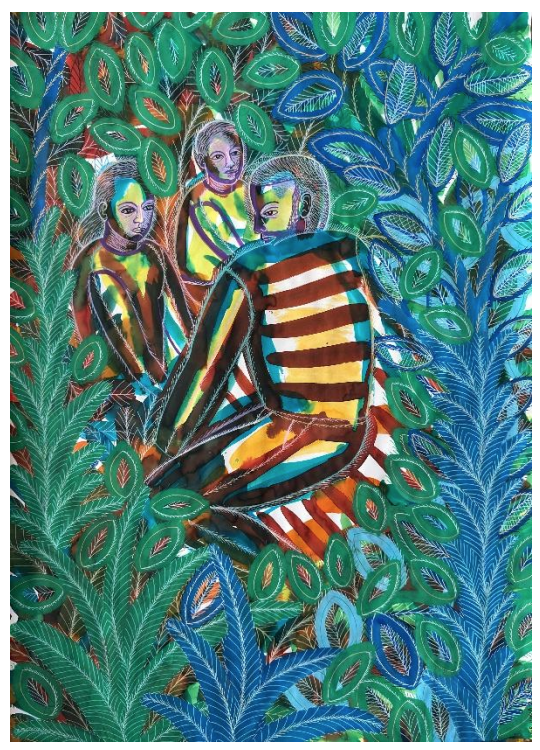
My Heart, 84 x 59cm Ink and pigment pen on paper, 2025
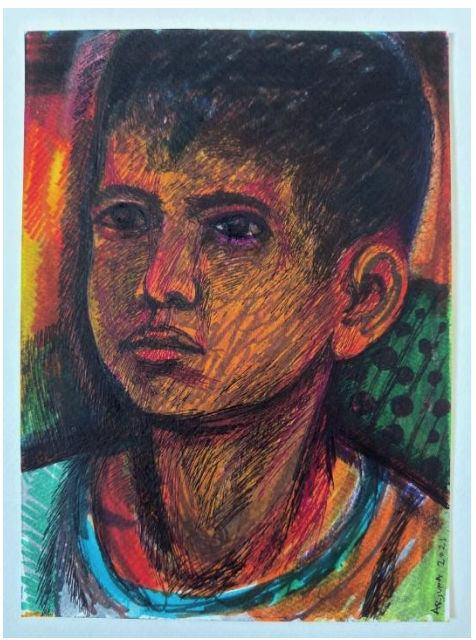
Timath 1, 25 x 17 cm Ink and pen on paper, 2023
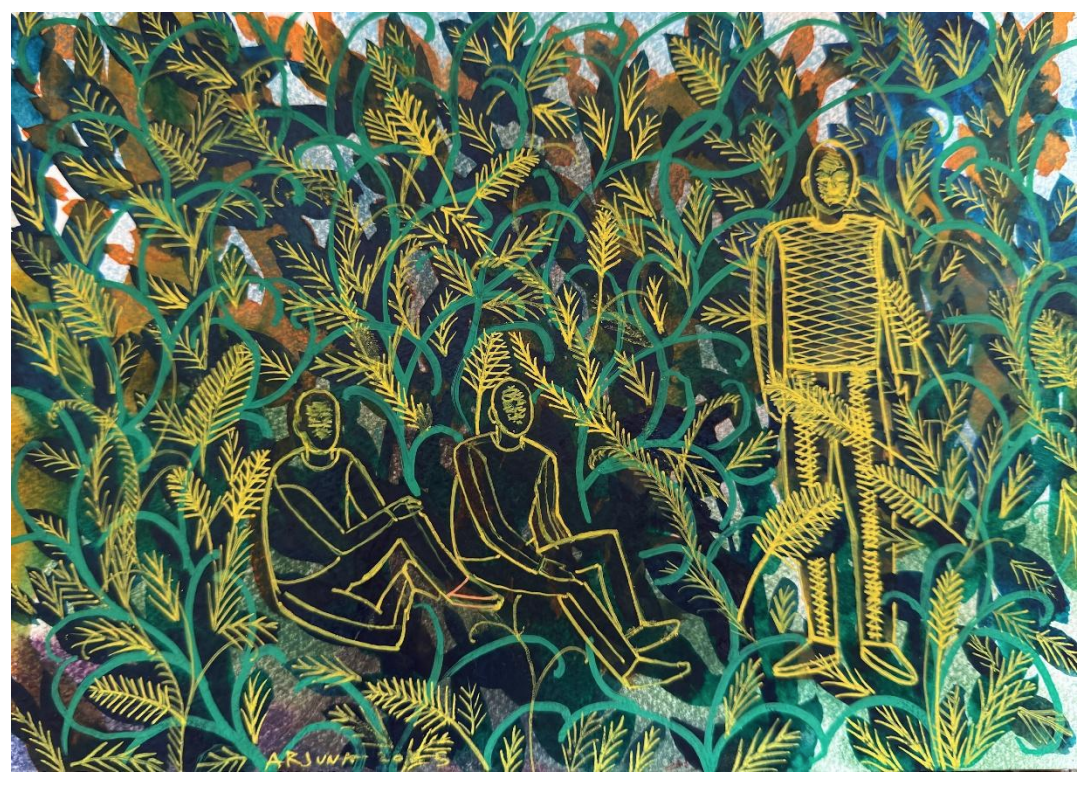
Ponders End Park, 25 x 17 cm Ink and pigment pen on paper, 2025
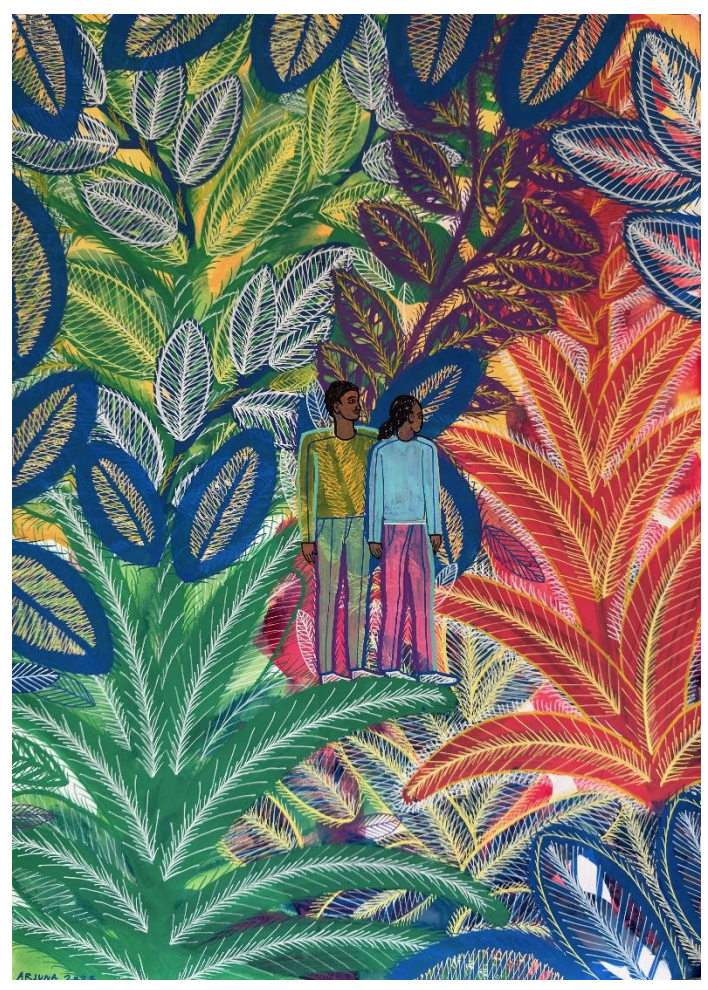
Close to my heart,60 x 42 cm, Ink and pigment pen on paper, 2025
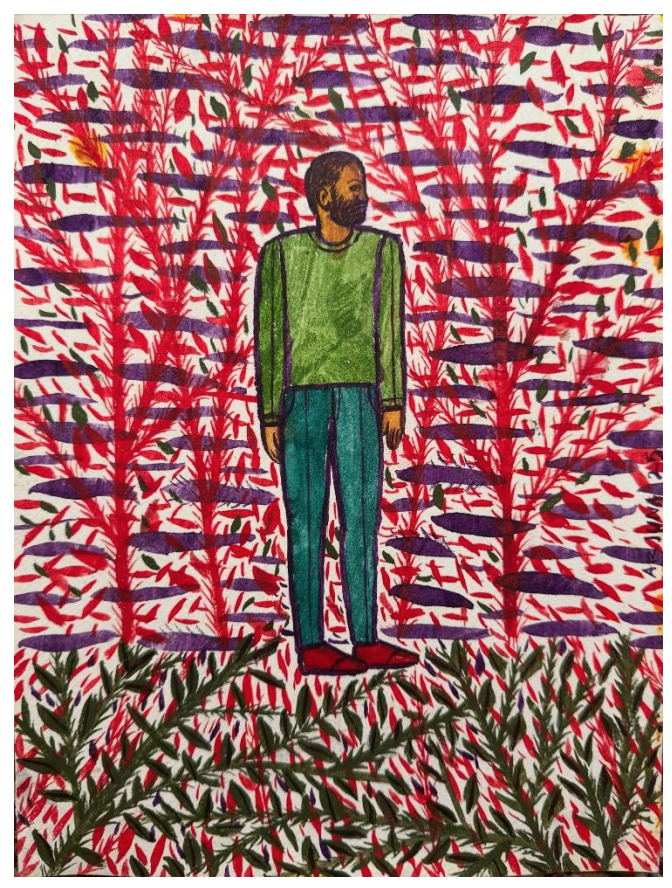
Middle East, 32 x 24 cm Oil on canvas, 2025
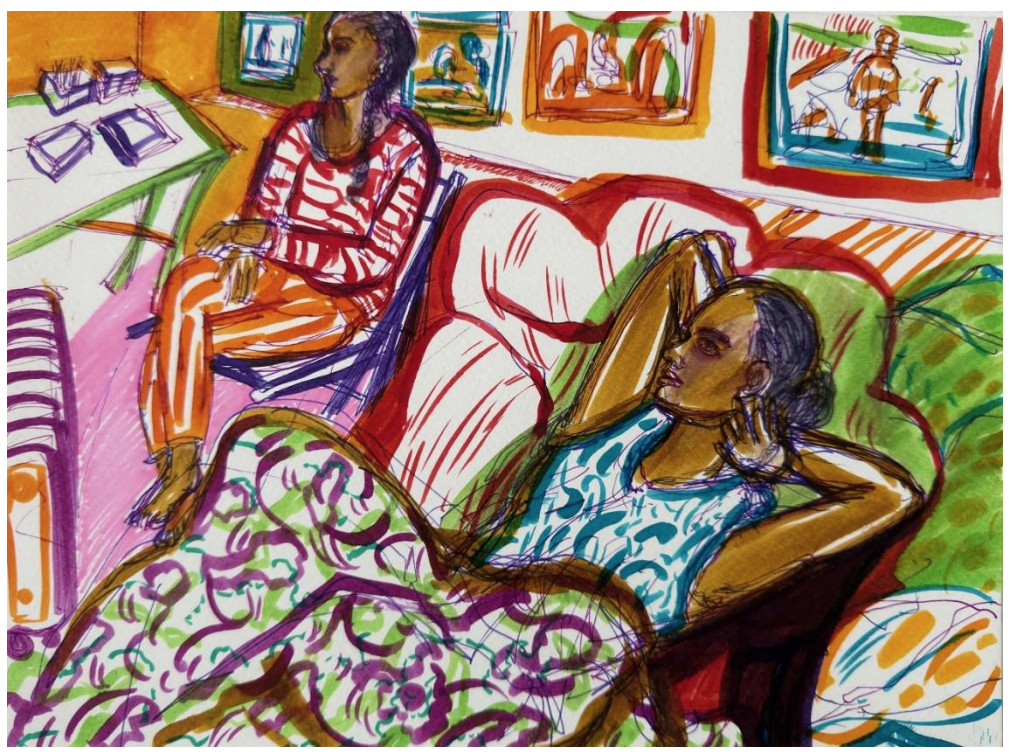
Living Room, 25 x 17 cm Ink and pigment pen on paper, 2025
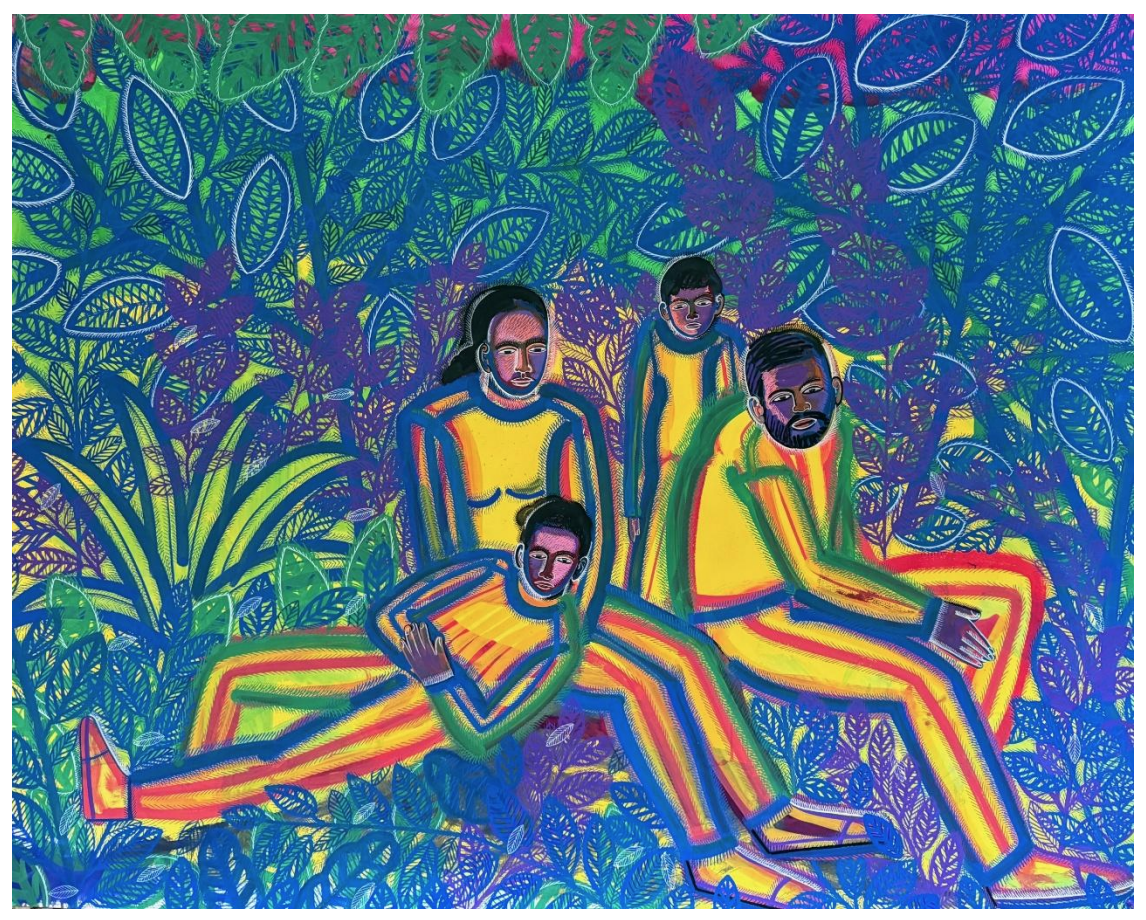
Family 150 x 120cm Ink and pigment pen on paper, 2025